5 min
23 dic 2025
Explore the importance of learning agility for teams, its five dimensions, and strategies to cultivate it for a future-ready workforce.
Lara Cobing
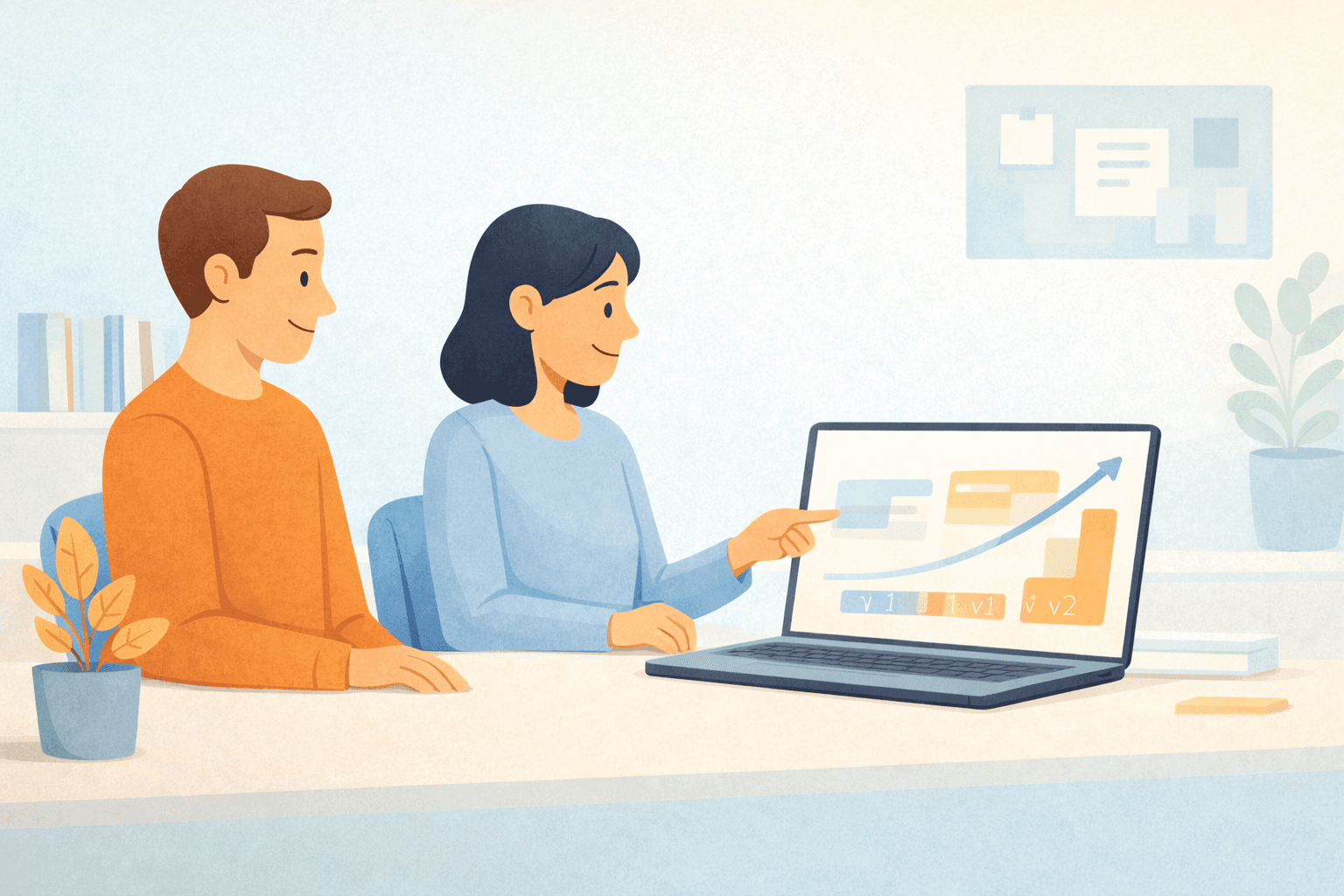
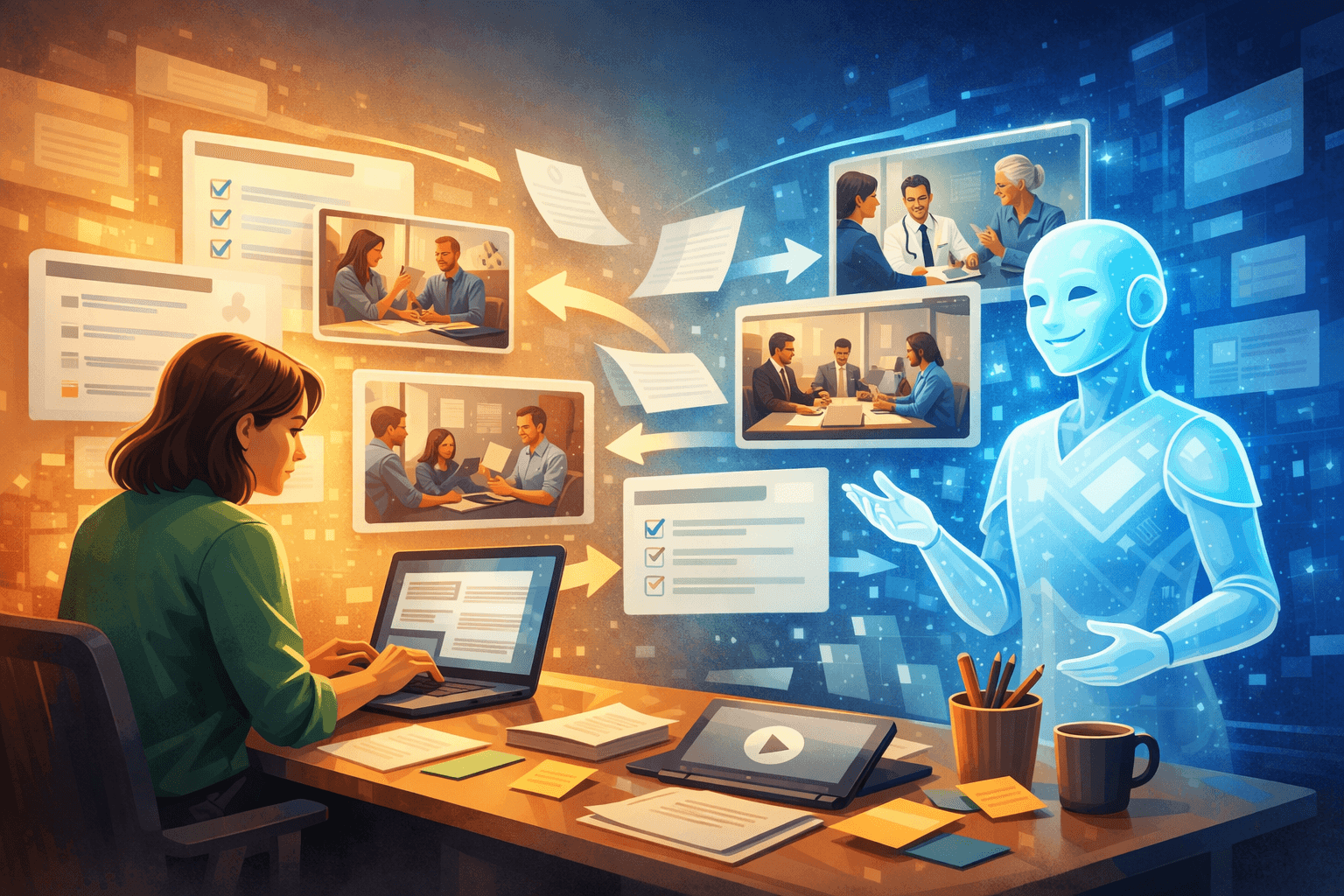
Imagine your smartphone updating itself while you sleep—no manual downloads, just brand‑new features each morning. What if your workforce could do the same? Learning agility is that overnight auto‑update for humans: the ability and the willingness to pick up fresh skills from experience and apply them in brand‑new situations. People with high learning agility don’t just learn fast—they stay fast when the ground shifts.
Learning Agility in 60 words
Learning agility is the capacity to rapidly acquire, unlearn, and re‑apply knowledge or behavior so you can perform effectively in new, uncertain, or first‑time conditions. It blends curiosity, reflection, experimentation, and resilience—qualities that separate employees who keep pace with change from those left behind.
The Five Dimensions of Learning Agility
Dimension | How It Shows Up at Work |
|---|---|
Mental Agility | Tackles messy problems, asks “What else could be true?” |
People Agility | Builds rapport across functions; flexes style for different stakeholders |
Change Agility | Treats pivots as opportunities, not threats |
Results Agility | Delivers ambitious goals despite sketchy playbooks |
Self‑Awareness | Solicits feedback, spots blind spots early |
These five factors—first codified by Korn Ferry—remain the gold standard for flagging high‑potential talent. See the breakdown in Korn Ferry’s leadership insight.
Why Learning Agility Tops HR Priority Lists in 2025
The skills half‑life is shrinking. LinkedIn’s Workplace Learning Report 2025 found that 49 % of talent leaders cite “adaptability” as the #1 driver of business value.
Executives feel the heat. According to ATD’s Bridging the Skills Gap 2024 study, 87 % of organisations report gaps in leadership and executive‑level skills.
Agility keeps the lights on—literally. The EY Future of Energy Survey 2025 PDF shows 86 % of power‑and‑utilities executives believe their workforce is agile enough to respond to shifting business needs—a giant leap from 57 % in 2021.
The message: an agile workforce innovates faster, dodges market potholes, and turns disruption into a competitive sport.
How to Spot Learning Agility (Before Your Annual Reviews Do)
Behavior‑Based Interview Prompts - “Tell me about a time you succeeded in a role that was 80 % new to you.” Look for pattern‑breaking rather than textbook responses.
Psychometric Tools - Korn Ferry’s standalone Learning Agility Coaching Tool benchmarks candidates against the five dimensions and predicts leadership potential years in advance.
Stretch Assignment Retros - After each rotation, debrief: What surprised you? What will you do differently next time? Reflection cements agility more than binge‑watching training videos.
Developing Learning Agility: A Four‑Step Playbook
1 — Build a “Sandbox” Culture
Launch low‑risk pilots—two‑week sprints to test a new customer‑service script, for instance. If it flops, celebrate the learning before filing the post‑mortem.
2 — Rotate Roles Early & Often
During COVID‑19, Unilever rolled out its internal‑mobility drive “Raise a Hand, Lend a Hand.” Employees volunteered for cross‑function gigs and super‑charged upskilling.
3 — Make Reflection a Ritual
Swap the “What went wrong?” meeting for a “What did I learn?” 15‑minute Friday huddle. Tiny habit, massive payoff.
4 — Harness AI‑Powered Microlearning
Platforms like Mindsmith surface bite‑size lessons tailored to competency gaps, then remix content as new skills emerge—turning continuous learning from New Year’s resolution into Tuesday habit.
Case Spotlight: Agility in the Energy Sector
A U.S. utility fast‑tracked its smart‑grid rollout, rendering legacy job descriptions obsolete overnight. By using learning‑agility scores to staff cross‑disciplinary “SWAT” teams, the company cut its timeline by 22 % and avoided US $14 M in contractor fees—mirroring findings in EY’s industry survey that agile teams are 2× more likely to hit tech‑transformation milestones.
Mindsmith: Your Learning‑Agility Power Tool
Mindsmith’s AI-powered authoring suite transforms learning agility principles into day‑to‑day practice especially for lean HR and learning teams that need to move fast without a battalion of developers.
Smart content reuse lets designers iterate modules in minutes, not weeks.
AI‑driven micro‑paths nudge learners: “Hey Alex, here’s a 3‑minute primer on change‑management before tomorrow’s kick‑off.”
Competency analytics spotlight which departments lag on mental or people agility—handing HR a data‑backed roadmap instead of guesswork.
(Fun fact: new users can have their first adaptive course live before their second coffee refill.)
Common Roadblocks & Quick Fixes
Even future‑ready teams face predictable hurdles on the road to learning agility. The good news: each obstacle has a quick, low‑cost intervention you can pilot this quarter.
Roadblock | Quick Fix |
|---|---|
Fixed Mindset Culture | Run “failure résumé” workshops—leaders share career flops to normalize risk‑taking. |
Psychological‑Safety Gap | Add one “red‑team” seat in meetings whose job is to ask naïve questions. |
Time Constraints | Trade one status meeting a week for a guided peer‑learning session. |
Ready to Hit Auto‑Update on Your Workforce?
Your smartphone wouldn’t last a month without regular updates; neither will your talent pipeline. Equip your team with learning agility now, and tomorrow’s curveballs will look a lot more like beach balls.
→ Sign up on Mindsmith or schedule a demo and see how fast agility scales when AI does the heavy lifting.
Quick Reference FAQ
Can learning agility be taught, or is it innate? Both. Natural curiosity helps, but structured reflection, stretch roles, and microlearning reinforce the habit.
What’s the fastest way to gauge a candidate’s agility? Pair a scenario‑based interview question with a short psychometric test (Korn Ferry’s tool is the most validated).
How often should assessments be repeated? Annually—more frequent pulses risk assessment fatigue.
Where do I start if my culture fears failure? Begin with micro‑experiments inside one volunteer team. Let small wins de‑risk the narrative before a company‑wide rollout.
Because the future refuses to send calendar invites, keep your team’s learning curve comfortably ahead of the change curve.