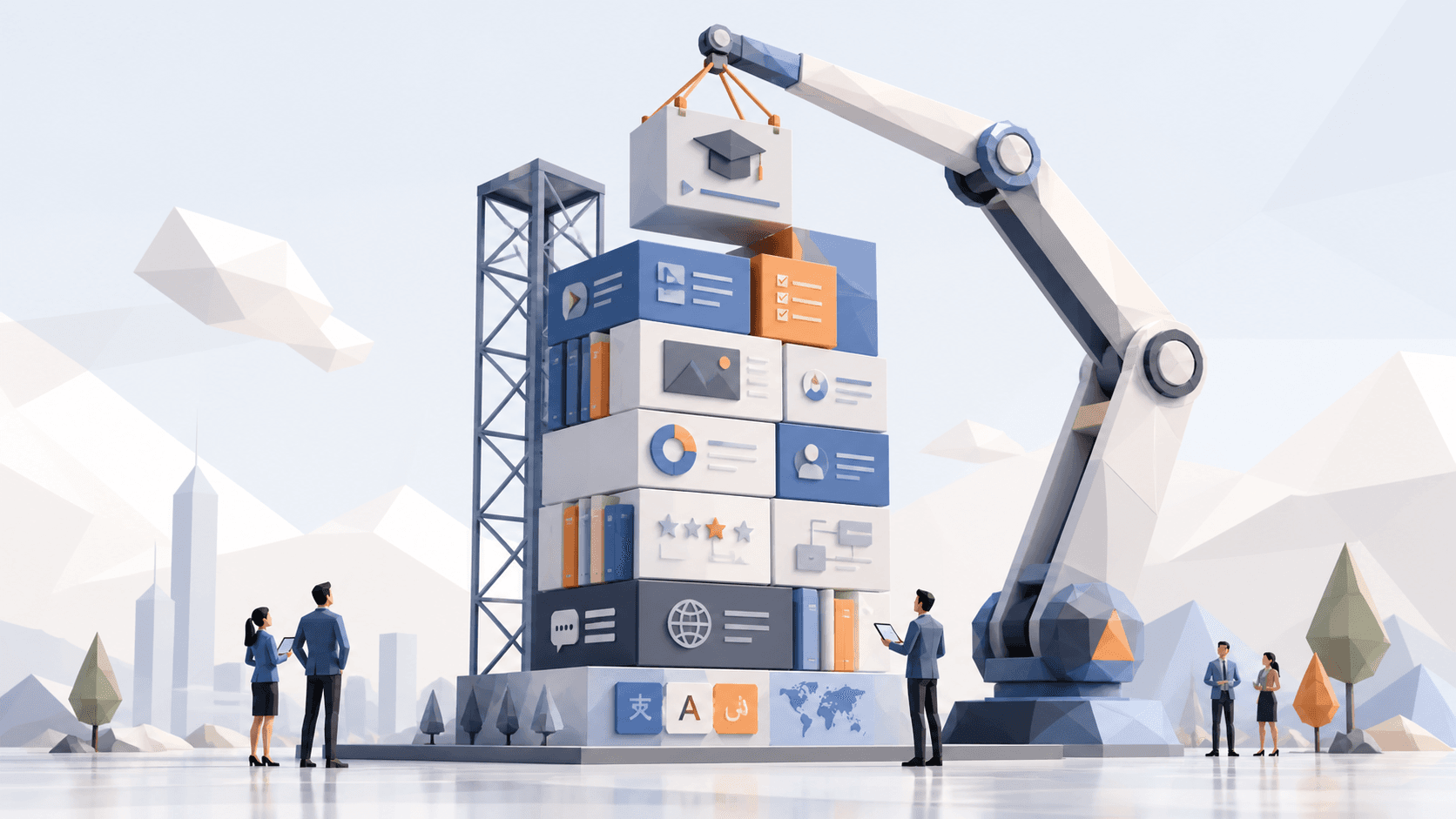
When I returned to my hometown after 17 years, I barely recognized it. Small buildings had given way to towering skyscrapers, a clear sign of growth and adaptation. The transformation was striking—exciting but also overwhelming. It made me think about how businesses evolve, especially when scaling corporate training. Just like a city expands to meet new demands, companies must grow their training programs while ensuring consistency, engagement, and effectiveness.
But scaling training isn’t just about adding more courses. Without a clear strategy, programs can become bloated, outdated, or disconnected from employees’ needs. The challenge is keeping learning relevant, interactive, and effective while ensuring alignment across teams and adapting to rapid organizational changes.
The key? AI-driven solutions, cloud-based authoring tools, and adaptive learning strategies that make training as dynamic and scalable as the ever-changing business landscape. With the right approach, organizations can ensure that training doesn’t just scale—it drives growth and empowers employees to succeed.
The AI Advantage in Corporate Training
AI is transforming corporate training by automating content creation, personalizing learning paths, and streamlining training management at scale. Unlike traditional methods that rely on manual updates and generic course materials, AI-driven solutions adapt to individual learners, making training more efficient and effective.
🔹 AI-Powered Content Automation – AI can generate training modules, quizzes, and assessments in seconds, reducing the time required for course development.
🔹 Personalized Learning Paths – AI-driven systems analyze learner performance and recommend content that aligns with their skills and knowledge gaps.
🔹 Smart Analytics and Optimization – AI tracks engagement and effectiveness, allowing organizations to refine training programs in real-time based on data-driven insights.
Companies leveraging AI in training report higher engagement rates, reduced time-to-competency, and cost savings compared to traditional training approaches. For instance, AI-powered learning platforms can tailor microlearning experiences to individual learners, allowing employees to engage with training at their own pace while maximizing retention.
The Challenges of Scaling Corporate Training
Before diving into solutions, it’s crucial to understand the obstacles that come with scaling training across an expanding workforce. Some of the most common challenges include:
🔹 Maintaining Consistency Across Teams and Locations – As organizations grow, training materials must stay uniform across departments, regions, and even different languages. Without standardization, knowledge gaps and inconsistencies emerge.
🔹 Keeping Training Engaging – Employees often view corporate training as a box to check rather than an opportunity for growth. Ensuring content remains interactive and relevant at scale is a major hurdle.
🔹 Adapting to Rapid Organizational Changes – Businesses evolve, and so should their training programs. Updating materials manually across a global workforce can be time-consuming and inefficient.
🔹 Managing Training Costs – Scaling training can quickly become expensive if reliant on traditional in-person methods or inefficient technology.
🔹 Measuring Training Effectiveness – A larger workforce means more data to analyze. Organizations need scalable ways to track training outcomes and continuously refine their programs.
These challenges may seem overwhelming, but they also present an opportunity for innovation. By leveraging AI-driven tools and cloud-based authoring platforms, organizations can turn these obstacles into advantages, making training more efficient, scalable, and engaging.
Key Strategies for Scaling Training Without Compromising Quality
1. AI-Driven Content Creation: Faster, Smarter, and Scalable
AI automates the creation of training materials, drastically reducing development time. But content creation is just the first step—to truly scale training effectively, organizations must also ensure that learning is relevant to each employee's unique needs. This is where AI-driven personalized learning comes in. With AI-powered tools, organizations can quickly generate courses, quizzes, and even interactive simulations. Organizations are using AI to automate course development, dramatically reducing content production time and accelerating time-to-launch for new training. AI content tools (including generative AI and AI video creators) also help maintain consistent quality by quickly updating materials and freeing experts to refine content.
🔹 Why It Works:
- AI extracts key learning points from existing documents and videos to auto-generate course content.
- Automates quiz and assessment creation, ensuring knowledge retention.
- Reduces the need for manual content updates, keeping training fresh and relevant.
Booz Allen Hamilton integrated generative AI into training content development, saving hundreds of hours in content production and significantly cutting costs.
2. Personalized Learning with AI: Tailoring Content to Each Employee
AI enables adaptive learning by analyzing employee engagement, knowledge levels, and skill gaps, adjusting training content accordingly. AI-driven platforms allow employees to receive customized learning paths based on their progress, job role, and interests. This ensures that training remains relevant and engaging, rather than a generic experience. AI-powered personalized learning also reduces time wasted on redundant content by adapting difficulty levels dynamically.
🔹 Why It Works:
- AI recommends courses tailored to an employee’s role and experience.
- Personalizes difficulty levels, making learning more effective.
- Increases engagement by ensuring employees only receive relevant training materials.
ServiceNow implemented an AI-driven learning platform, leading to 65% of employees engaging with personalized learning paths within the first month.
3. Cloud-Based Authoring: AI-Powered Collaboration at Scale
Cloud-based authoring platforms, especially those with AI integration, allow training teams to collaborate in real-time while ensuring consistency across global locations. AI-driven authoring tools simplify content updates, enable multilingual support, and ensure standardization across departments. This approach enhances agility, making it easier to roll out new training materials while keeping them aligned with brand identity and compliance requirements.
🔹 Why It Works:
- AI-powered suggestions for course structuring and design.
- Real-time updates to training materials accessible to all employees.
- Simplifies localization for global teams.
Fiery used an AI-powered cloud platform to scale training for 50,000 learners in 8 languages, producing over 1,000 training videos in one year while maintaining consistency and reducing update time by 87%.
4. Scenario-Based Learning: AI-Enhanced Simulations
AI enhances scenario-based learning by adapting case studies and simulations based on real-time learner input. Companies are leveraging AI-powered immersive learning experiences, such as VR and adaptive simulations, to help employees develop hands-on skills in a risk-free environment. These solutions enable learners to practice real-world situations, receive instant AI-driven feedback, and refine their decision-making abilities more effectively than traditional training methods.
🔹 Why It Works:
- AI creates personalized branching scenarios tailored to job-specific challenges.
- Employees get interactive, hands-on training without real-world risks.
- Boosts knowledge retention by up to 75% compared to passive learning (Source).
Walmart implemented AI-powered VR training, reducing training time by 96% (from 8 hours to 15 minutes) while increasing employee satisfaction by 30%.
5. AI-Driven Analytics: Measuring and Optimizing Training Effectiveness
AI-powered analytics provide organizations with measurable financial benefits, from reducing wasted training time to optimizing learning investments. According to research, companies that integrate AI-driven analytics into corporate training can experience up to a 50% higher ROI compared to traditional learning models. AI learning analytics can detect knowledge gaps, predict training needs, and offer real-time performance tracking. By continuously assessing employee progress, companies can refine their learning strategies and focus on areas requiring improvement, leading to better training outcomes and increased efficiency.
🔹 Why It Works:
- AI analyzes learner data to detect skill gaps and recommend content updates.
- Predictive analytics forecast future training needs.
- Provides real-time feedback to instructors and learning teams.
IBM’s integration of AI into its training programs has not only improved productivity but also reduced costs significantly. By streamlining workflows and optimizing employee learning, AI-powered training can directly impact an organization’s bottom line, making it a strategic investment rather than just an operational expense. For instance, a 2023 Forrester Consulting Total Economic Impact study found a 30% reduction in interaction handle time for chatbot-augmented service agents using IBM Watson Assistant, valued at USD 2.4 million over a three-year period.
Why Mindsmith is the AI-Powered Solution for Scalable Training
Mindsmith’s AI-powered platform is designed to make scaling corporate training seamless and efficient by integrating cutting-edge technology with user-friendly functionality. It enables organizations to deliver engaging, adaptive, and effective training experiences at scale.
AI-Powered Content Creation – Automates course development, making training deployment faster while ensuring content remains up-to-date and relevant.
Personalized Learning Paths – Uses AI-driven recommendations to tailor content for each employee, providing a customized and engaging learning experience.
Cloud-Based Collaboration – Enables real-time updates and seamless team collaboration, allowing training teams to work together from anywhere.
Built-in Analytics & Insights – Tracks learner progress, engagement, and completion rates while offering actionable insights to optimize training effectiveness.
Multi-Format & Multilingual Support – Scales training across global teams effortlessly with support for multiple content formats, languages, and localization features.
Scenario-Based & Interactive Learning – Enhances engagement with AI-powered branching scenarios, interactive modules, and simulations tailored to real-world job role.
Conclusion
Scaling corporate training doesn’t have to mean losing its impact. AI-driven automation, personalization, and analytics make it possible to deliver high-quality training at scale. Organizations that embrace these technologies can streamline content creation, enhance engagement, and measure effectiveness with data-driven insights.
Mindsmith takes these best practices to the next level by providing an all-in-one AI-powered training solution. Empower your workforce with scalable, intelligent learning experiences. Schedule a demo today and see how Mindsmith can transform your training programs.